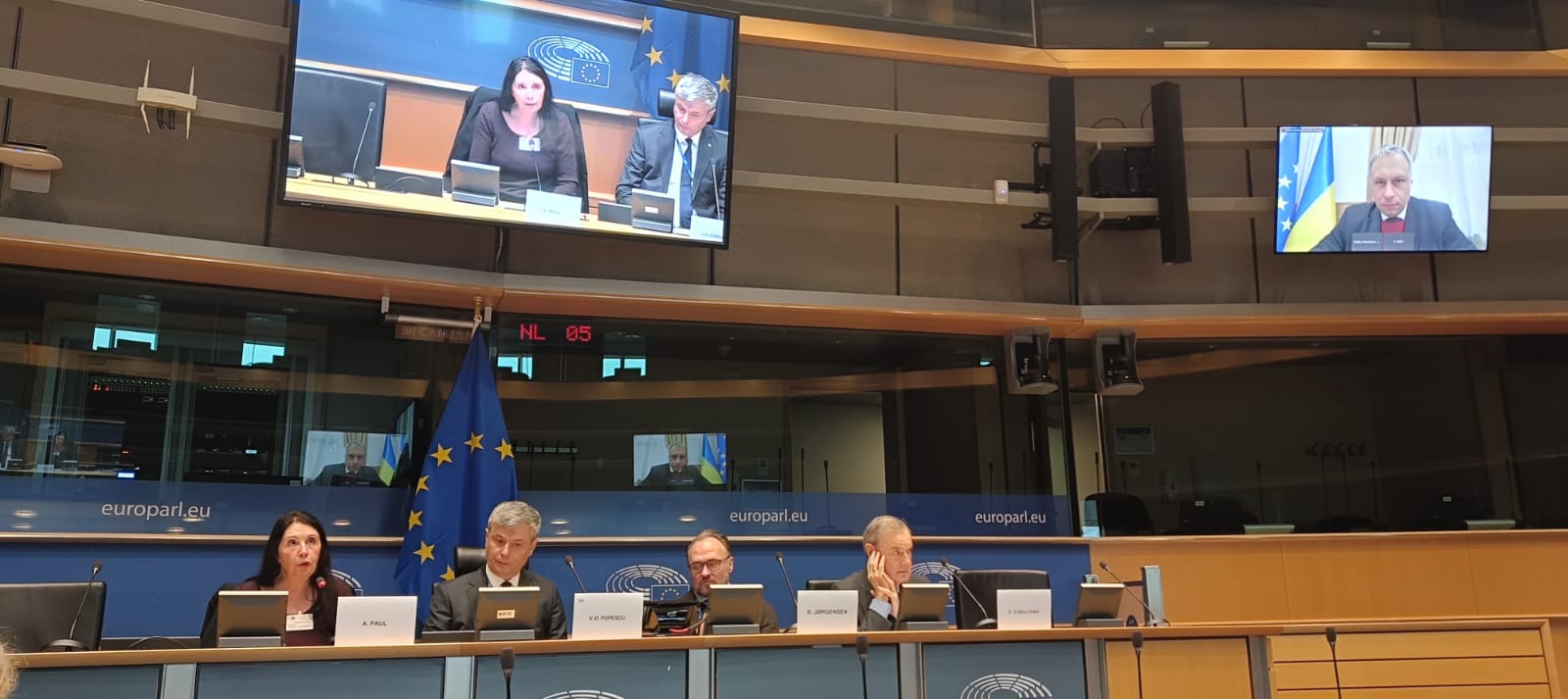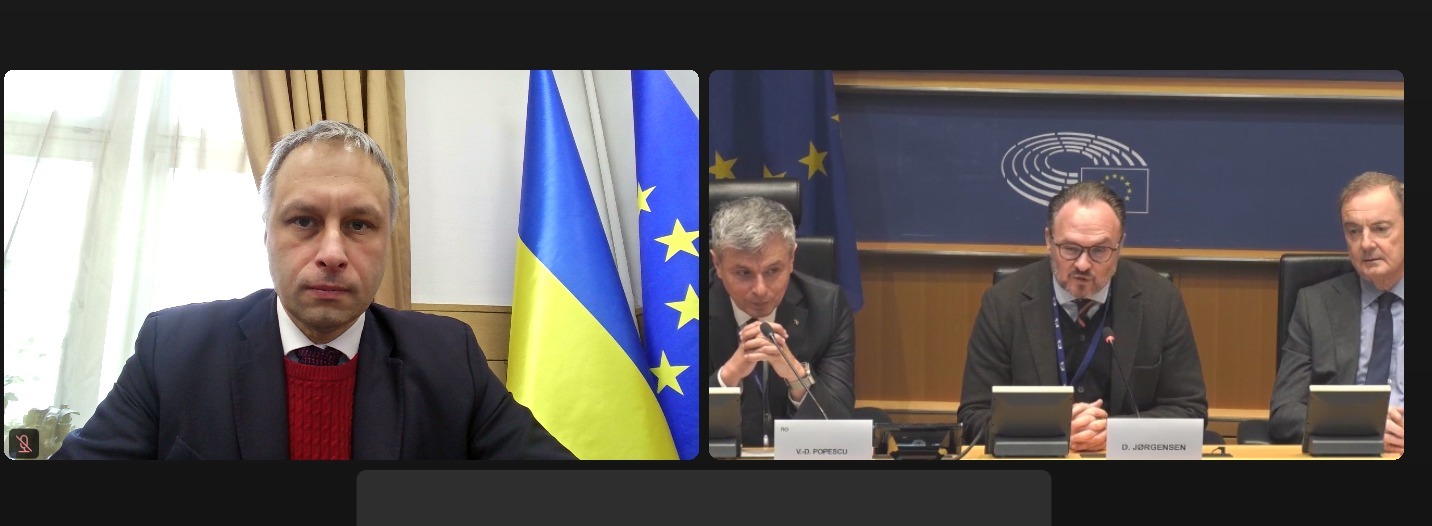
Deputy Minister of Energy of Ukraine Roman Andarak participated in an online high-level dialogue organized by the European Parliament entitled “Taming the Russian military machine: how to stop the European Union from purchasing Russian energy and protect supplies to Member States.”
Roman Andarak emphasized that since the beginning of Russia’s full-scale invasion of Ukraine, energy infrastructure has been a systematic target of the aggressor.
“Attacks on critical energy facilities remain an integral component of Russia’s military strategy. The Russian Federation has long used energy as a weapon to achieve political objectives - previously through manipulation of supply and dependency, and today through the direct physical destruction of infrastructure,” he stated.
The Deputy Minister noted that recent large-scale attacks have caused substantial damage to electricity generation, distribution, and transmission facilities, leading to emergency power outages affecting hundreds of thousands of consumers across Ukraine. He expressed gratitude to international partners whose assistance has been instrumental in maintaining energy system stability under constant pressure from the aggressor.
Ukraine acknowledges and strongly welcomes the significant progress already achieved by the European Union in reducing its dependence on Russian energy resources. Owing to the REPowerEU roadmap, new legislation, and successive sanctions packages, the EU has moved from political commitments to concrete, legally binding measures aimed at the complete phase-out of Russian oil, gas, and nuclear energy from EU markets. A clear timeline has been established to end imports of Russian gas - both pipeline gas and LNG - and oil by the end of 2027, while simultaneously strengthening diversification, infrastructure development, and market resilience.
“We fully recognize the economic and political challenges this transition poses for certain Member States that have historically relied on Russian supplies via existing infrastructure. However, the medium- and long-term benefits - enhanced energy security, reduced vulnerability to geopolitical blackmail, and accelerated investment in clean and diversified energy systems - clearly outweigh the short-term costs. These measures significantly limit Russia’s capacity to finance its war and reinforce Europe’s strategic autonomy,” Roman Andarak stressed.
In this context, he underscored the critical importance of transatlantic cooperation and further strengthening sanctions against the aggressor. Ukraine advocates additional measures, including the expansion of sanctions against major Russian oil and gas producers that are already subject to United States sanctions.
A separate and urgent priority, he added, is the tightening of sanctions against Russia’s so-called “shadow fleet,” as well as the enhancement of mechanisms to prevent the circumvention of existing restrictive measures.
“Ending the continued purchase of Russian energy resources is not merely an issue of energy policy. It is a matter of security, trust, and collective responsibility. Ukraine stands ready to continue close cooperation with its partners to ensure the effective implementation of sanctions, the stability of energy markets, and the irreversibility of Europe’s transition away from dependence on Russian energy,” the Deputy Minister emphasized.
Roman Andarak also highlighted a new dimension of energy security in the context of military threats - the strengthening of physical protection of energy infrastructure. Ukraine is prepared to share with its partners the unique experience gained in recent years, particularly regarding the protection of substations and other critical equipment. He noted the importance of standardizing equipment and establishing emergency reserves that may be required by countries in the event of large-scale damage to installed assets.
In addition, the Deputy Minister stressed the need to establish minimum (strategic) gas reserves, following the same principles already applied by the EU in maintaining minimum reserves of oil and petroleum products. Such an approach, he noted, would contribute to market stabilization and help prevent price distortions in the future.