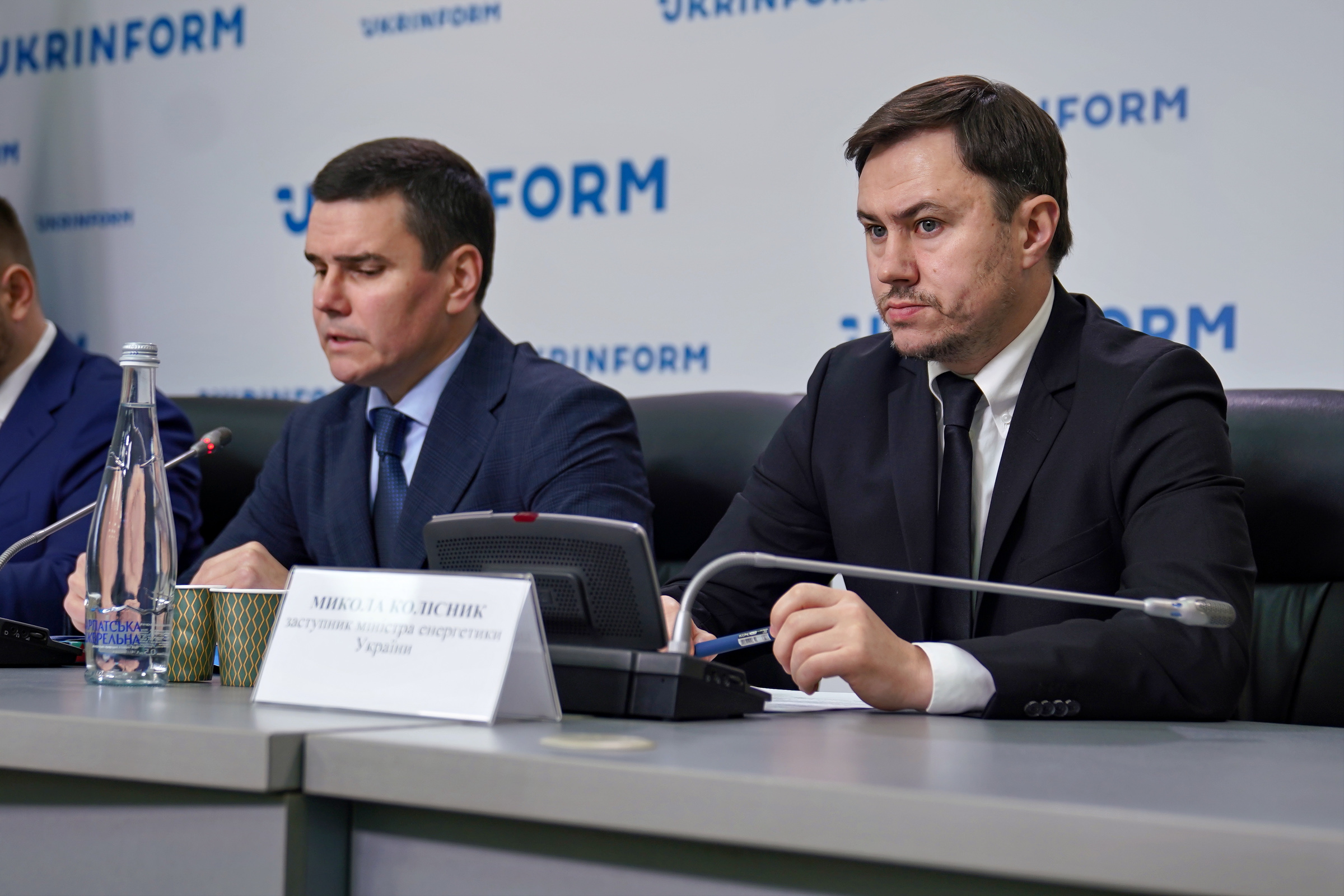
The situation in Ukraine’s united energy system remains challenging due to ongoing Russian shelling, Deputy Minister of Energy of Ukraine Mykola Kolisnyk reported.
According to the Deputy Minister, all nine nuclear power units located in territory controlled by Ukraine are currently operating. To balance the power system and meet demand, Ukraine is also using electricity imports and, when required, emergency assistance from partner countries.
“However, the main difficulty lies in the ability to transmit electricity between the central and eastern power systems,” he noted, emphasizing that the latest wave of massive Russian attacks targeted critical nodes essential for electricity transmission across the country.
Mr. Kolisnyk stressed that Russia continues systematic strikes on Ukraine’s energy infrastructure. Over the past day alone, energy facilities in the Kharkiv, Donetsk, Dnipropetrovsk, and Odesa regions were attacked. In the Odesa region, one energy sector employee was wounded and is currently receiving medical care.
Due to the consequences of these attacks, all regions of Ukraine are experiencing electricity restrictions for industrial consumers and businesses, as well as scheduled hourly outages. The western region is applying a two-stage outage schedule, while the southern, central, northern, and eastern regions have introduced a three-stage system.
Energy workers are operating around the clock to restore electricity supply and connect facilities to backup schemes. Efforts continue to replenish emergency repair stocks of equipment. At the same time, in frontline areas, repair crews face significant risks due to constant Russian attacks on civilian energy infrastructure.
Despite these challenges, the state has fulfilled its task of accumulating sufficient energy resources for the winter period: more than 13 bcm of gas have been injected into underground storage, and the necessary reserves of coal and fuel oil have been secured.
To further strengthen Ukraine’s energy resilience, the government continues to promote distributed generation by simplifying land allocation, grid connection, construction, and commissioning procedures. Businesses are actively implementing such projects, including through state preferential loan programs such as 5-7-9.
“In 2025 alone, more than 1,000 MW of distributed generation capacity has already been commissioned in Ukraine - including 531 MW of renewable energy and 661 MW of gas-fired generation,” Mr. Kolisnyk added.