The new team of the Ministry of Energy began its work under unprecedented pressure on the country’s energy system. The first months coincided with the peak of massive Russian strikes on critical infrastructure, as well as the harshest frost conditions since the start of the full-scale invasion.
The primary objective of the initial phase was to ensure the successful completion of the heating season and maintain stable system operation. This objective has been achieved. At the same time, the Ministry has launched preparations for the 2026–2027 season, combining tactical response measures with the implementation of a long-term course towards modernization and resilience of the energy system in line with European standards.
Key results achieved during the first 100 days:
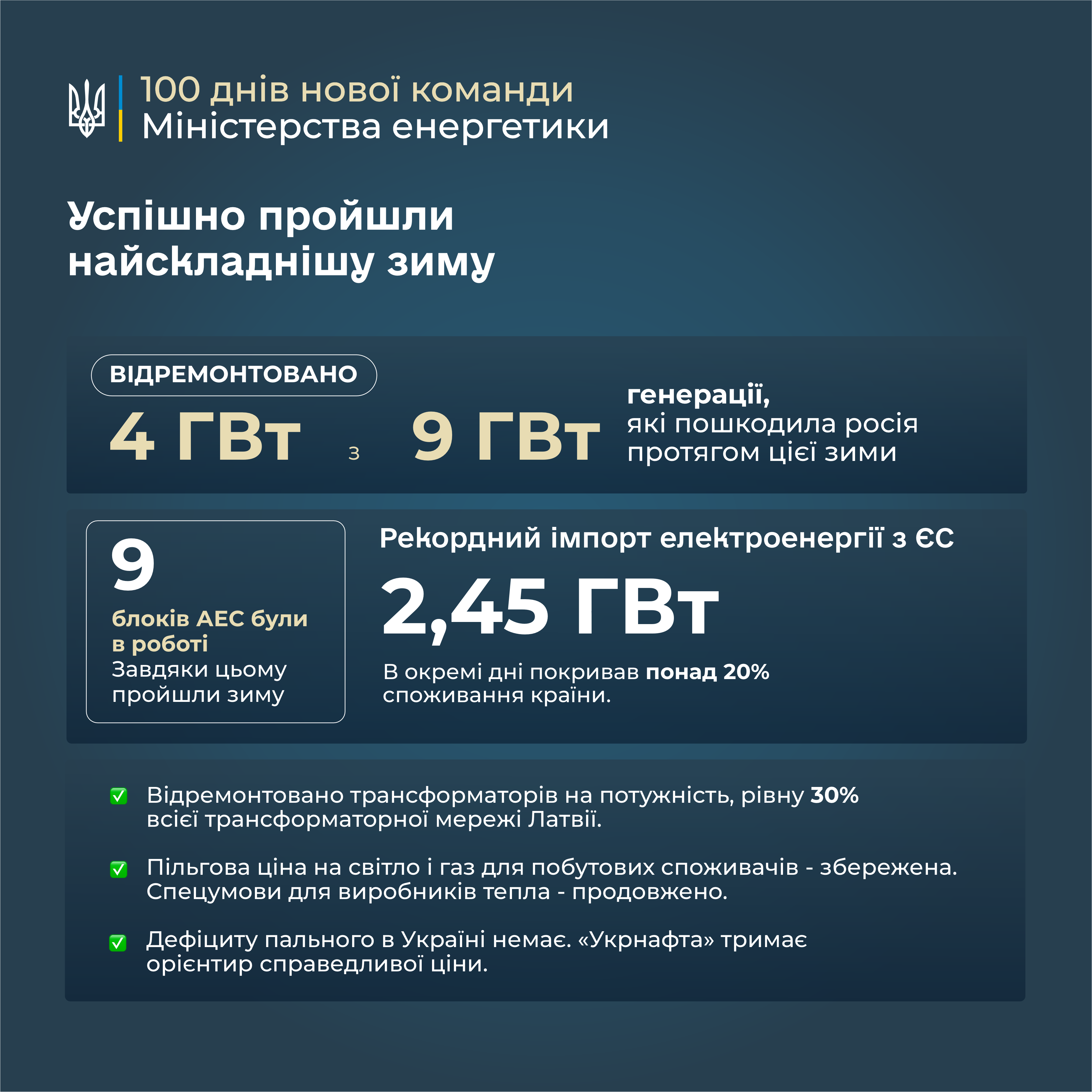
- Ukraine successfully passed the most challenging heating season of the full-scale war. The system remained stable despite unprecedented pressure, attacks, and severe weather conditions.
- More than 4 GW out of 9 GW of generation capacity damaged by Russia during the winter has been restored, including 1 GW under new plans as part of preparations for the next winter.
- A record level of electricity imports from the EU was ensured, covering more than 20% of national consumption on certain days.
- Transformers equivalent to 30% of Latvia’s total transformer network capacity were repaired.
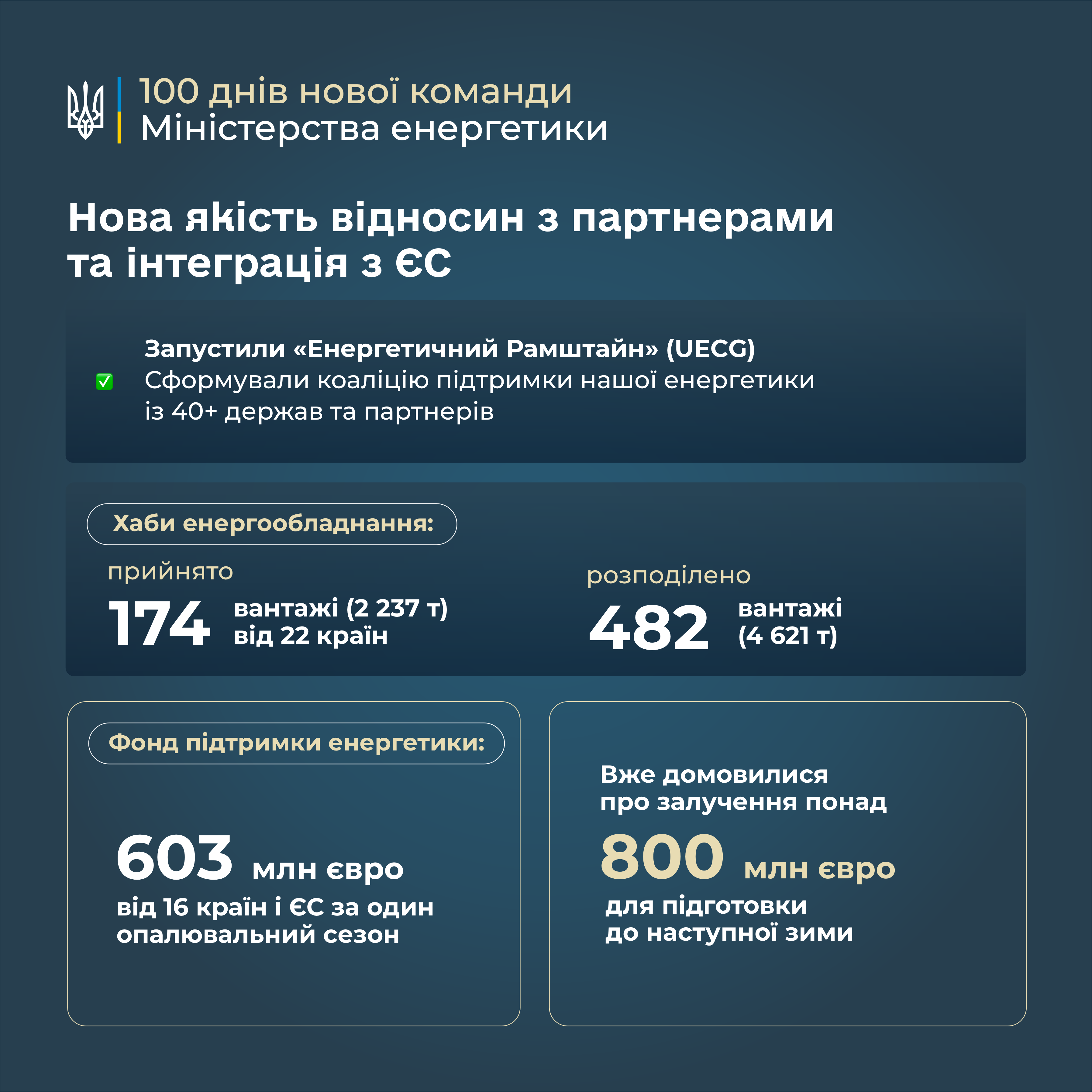
- The “Energy Ramstein” (UECG) format was launched, forming a support coalition of over 40 countries and partners.
- The work of energy equipment hubs was systematized: 174 shipments (2,237 tonnes) from 22 countries were received, and 482 shipments (4,621 tonnes) distributed, significantly accelerating repair timelines.
- €603 million was mobilized through the Energy Support Fund from 16 countries and the EU during a single heating season, with agreements reached to attract over €800 million for the next winter.
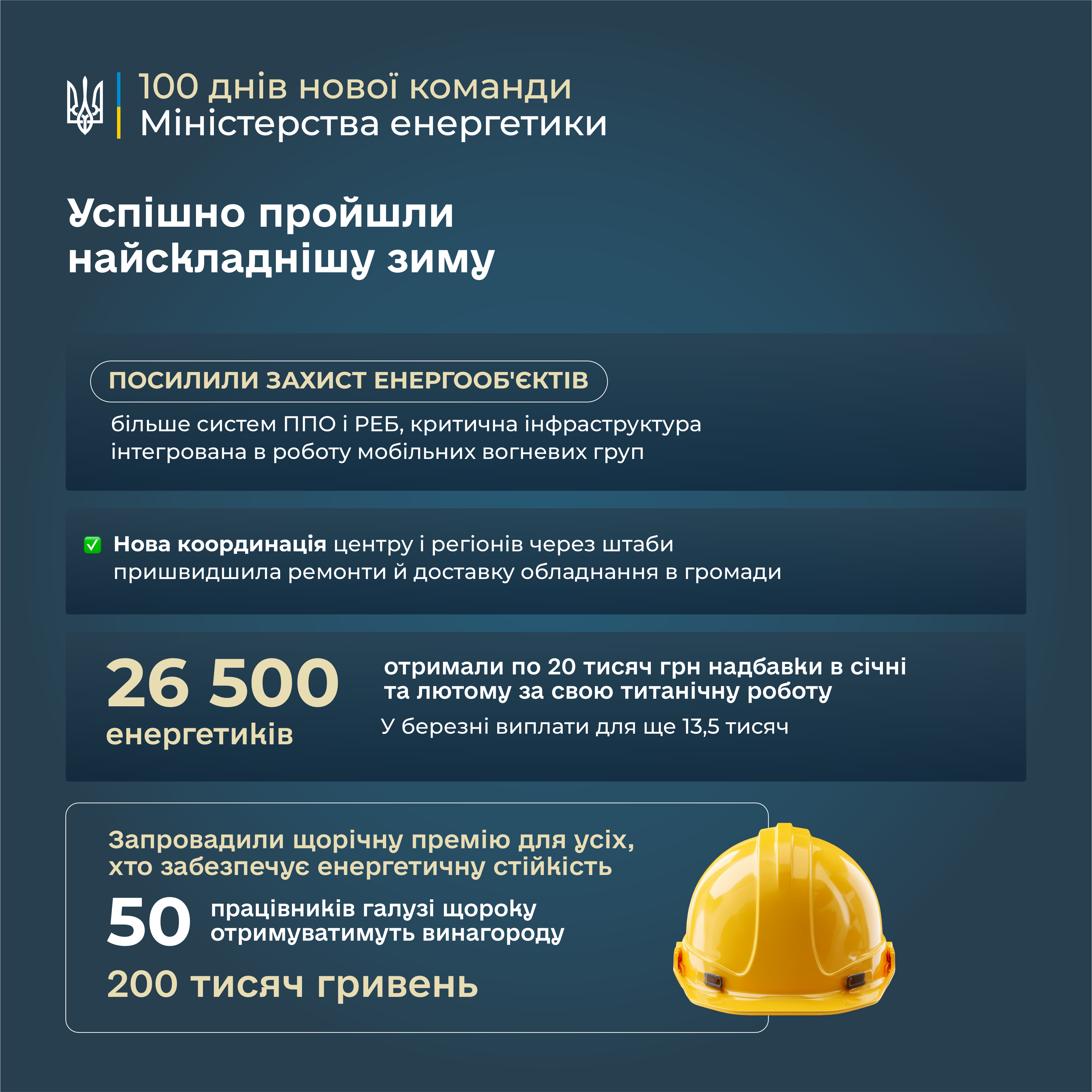
- Support was provided to repair crews: 26,500 energy workers received additional payments of UAH 20,000 in January and February, with a further 13,500 receiving payments in March.
- Preferential electricity and gas prices for households were maintained, and special conditions for heat producers extended.
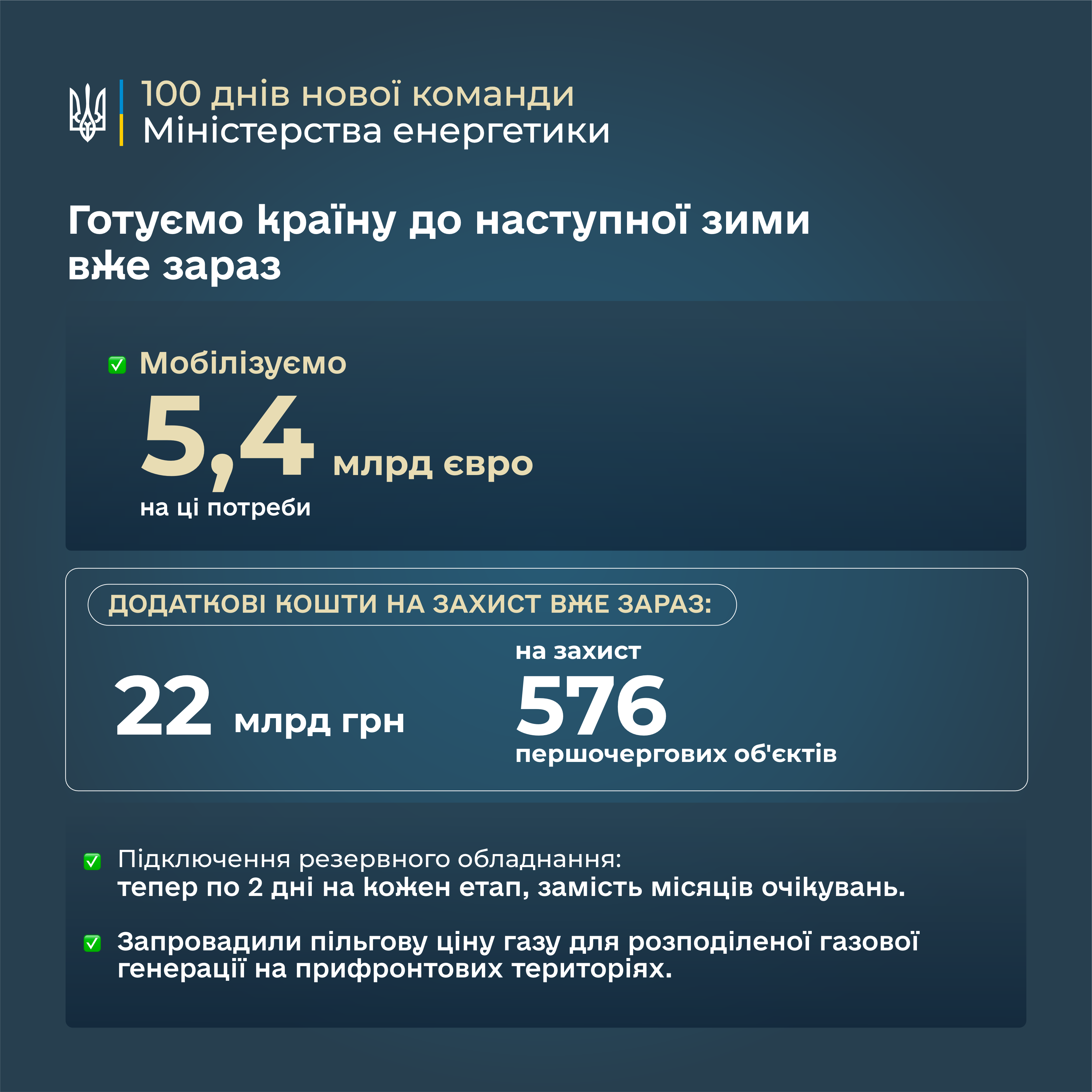
- Protection of energy facilities was strengthened: air defence and electronic warfare systems were expanded, and critical infrastructure integrated into mobile fire group operations. An additional UAH 22 billion was allocated for the protection of 576 priority facilities.
- A new level of coordination between central and regional authorities was established through штабs, significantly accelerating repairs and equipment delivery to communities.
- There is no fuel shortage in Ukraine; Ukrnafta maintains a benchmark for fair market pricing.
- Preparations for the next winter have begun under new approaches, with €5.4 billion being mobilized from partners.
- Connection time for backup equipment has been reduced to two days per stage, compared to months previously.
- Preferential gas pricing for distributed gas generation in frontline areas has been ensured.
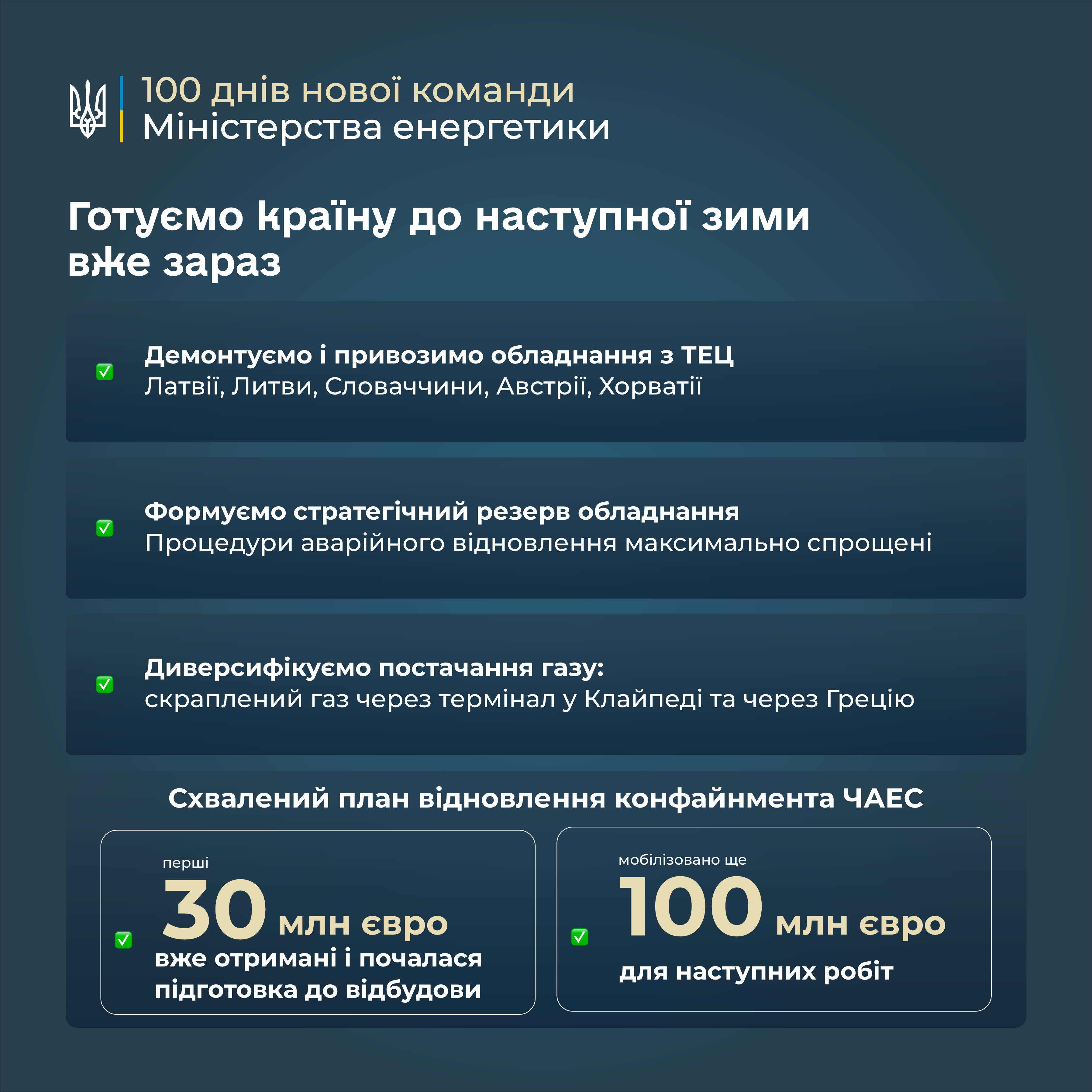
- Equipment is being dismantled and delivered from eight thermal power plants in Latvia, Lithuania, Slovakia, Austria, and Croatia for the restoration of Ukrainian facilities.
- A strategic reserve of equipment has been established, and emergency recovery procedures simplified.
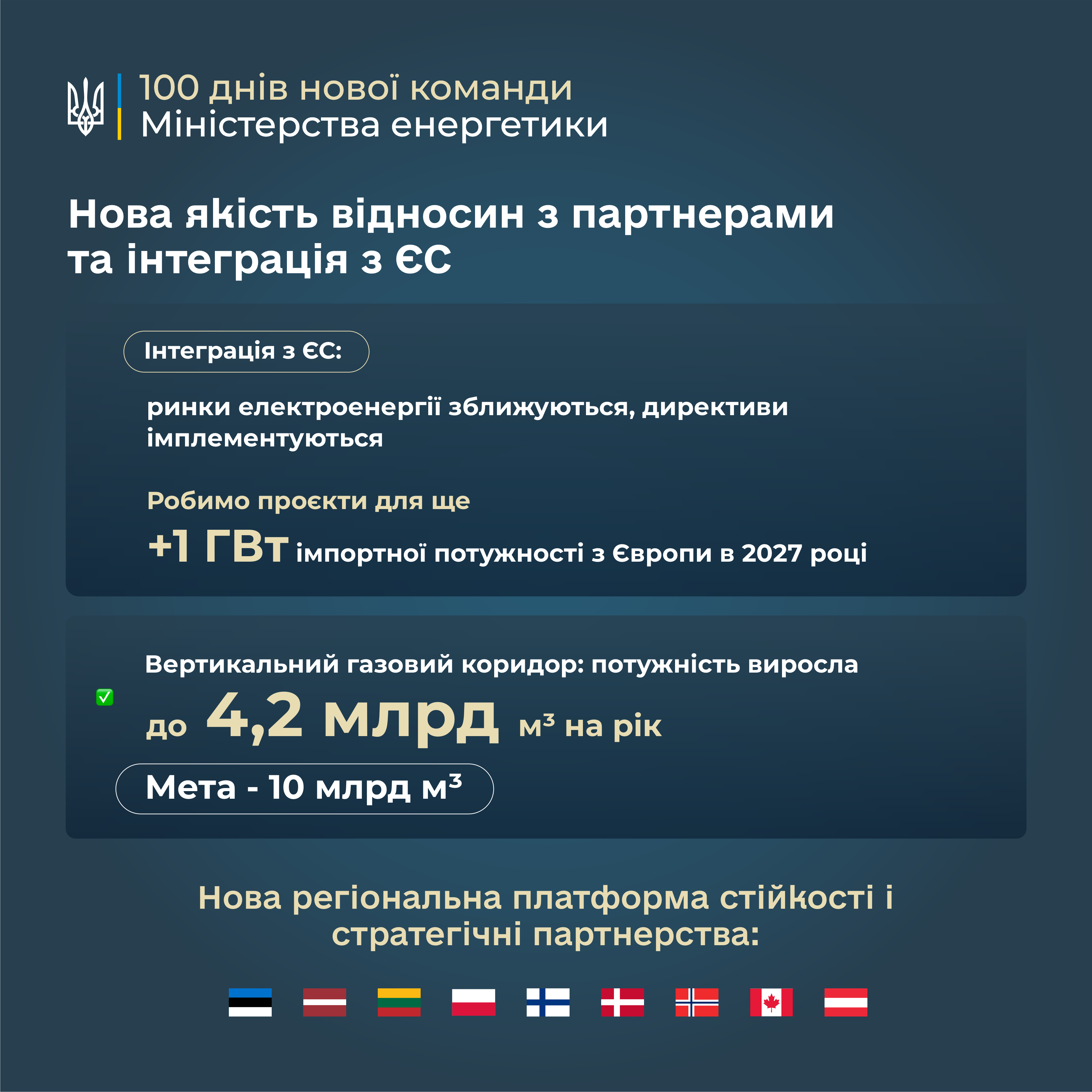
- Gas supply routes have been diversified, including LNG via the Klaipėda terminal and through Greece, increasing the capacity of the Vertical Gas Corridor to 4.2 bcm annually.
- A plan for restoring the Chornobyl sarcophagus has been approved, with the first €30 million secured and preparatory works underway. Agreements have been reached to attract an additional €100 million for subsequent phases.
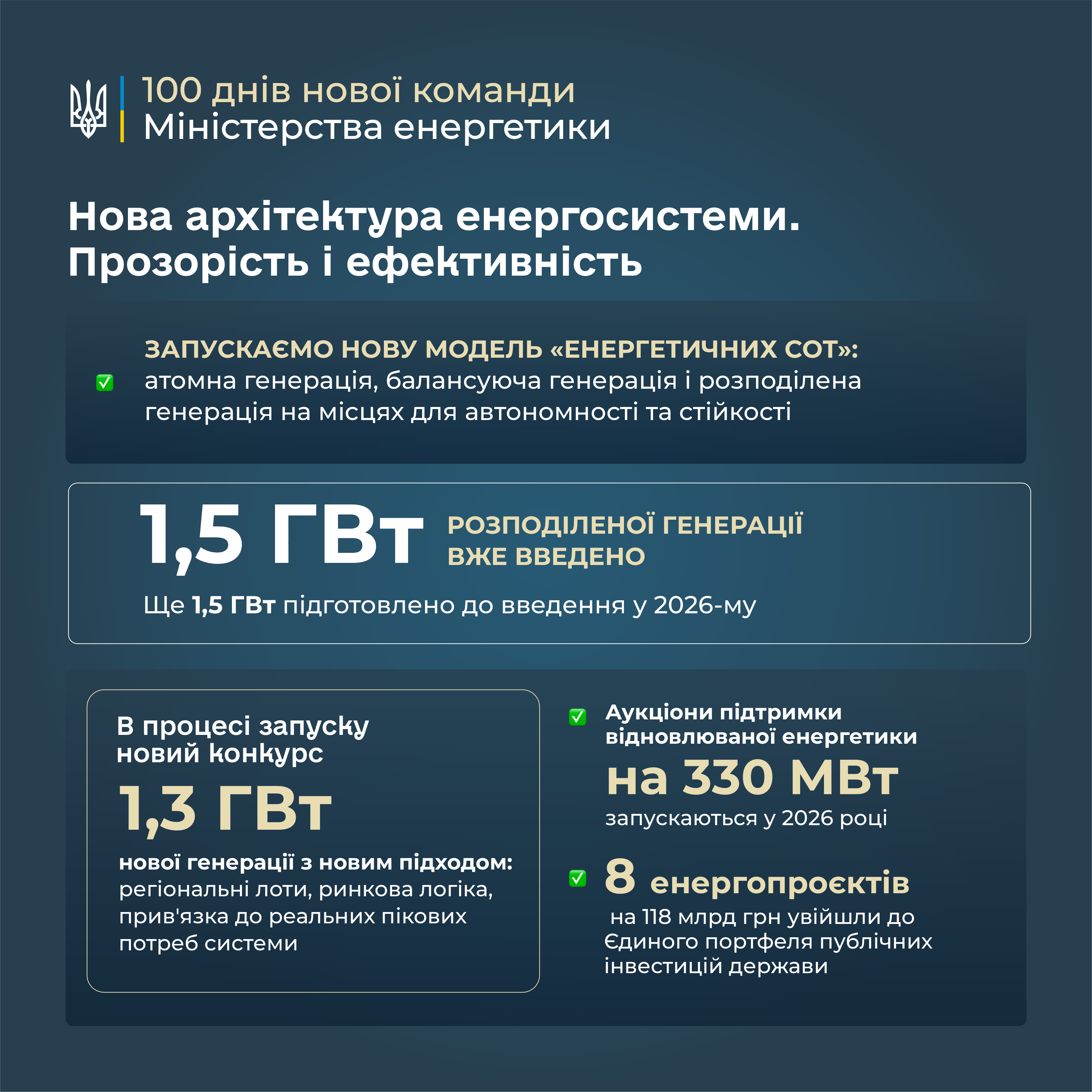
- A new “energy cells” model is being implemented to ensure greater regional autonomy.
- 1.5 GW of distributed gas generation has been commissioned, with an additional 1.5 GW planned for launch in 2026.
- A tender for the construction of 1.3 GW of new generation capacity is being launched under a new approach based on regional lots and market principles.
- Renewable energy support auctions totaling 330 MW are planned for 2026.
- Integration with the European electricity market is advancing, with projects underway to increase import capacity by an additional 1 GW by 2027.
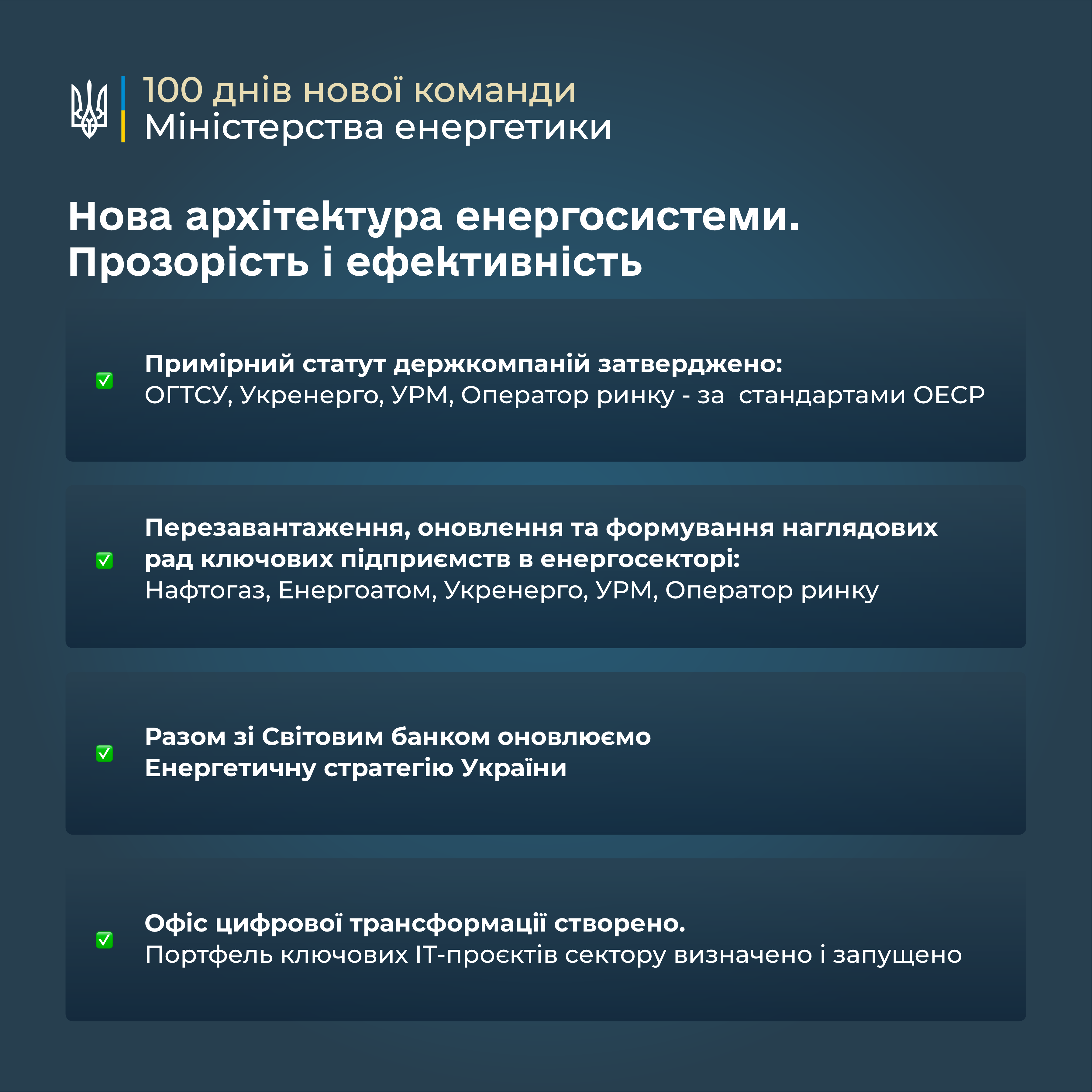
- Supervisory boards of key sector enterprises have been renewed, including Naftogaz, Energoatom, Ukrenergo, URM, and the Market Operator.
- Model charters for state-owned energy companies have been approved in line with OECD standards.
- Work on updating Ukraine’s Energy Strategy has commenced jointly with the World Bank.
- A Digital Transformation Office has been established, with key IT projects identified and launched.
- Business support has been expanded, including 0% loans of up to UAH 10 million for generation equipment for up to three years, and an increase in the 5-7-9% programme limit for energy projects from UAH 150 million to UAH 250 million.
- Bureaucratic barriers for installing rooftop and façade solar power plants have been removed.
- Under the “Ray of Hope” initiative, 7 medical facilities have received their own power plants, with 89 more under construction.
- A new regional platform for energy resilience has been established with the participation of the Baltic states, Poland, Finland, Denmark, and Norway, alongside strategic partnerships with Canada and Austria.
- An annual award has been introduced for professionals ensuring energy resilience — UAH 200,000 for 50 recipients.
The Ministry expressed its gratitude to international partners for their support and to Ukrainian energy workers for their dedicated efforts under extraordinary conditions.